
ERIA Publications

From President Marcos’ Call to Action: Strengthening Oil and Gas Stockpiling Systems in ASEAN
This policy brief assesses ASEAN’s increasing exposure to energy supply disruptions, particularly through critical chokepoints such as the Strait of Hormuz, and underscores the urgent need to strengthen regional resilience.

From Shock to Strategy: Strengthening ASEAN Energy Security and Economic Resilience after the Strait of Hormuz Disruption
The effective closure of the Strait of Hormuz in February 2026 represents a structural rupture in global energy trade flows with far-reaching implications for ASEAN economies. This paper argues that the disruption is not a temporary price shock but a systemic stress test exposing deep vulnerabilities in ASEAN’s energy systems, supply chains, and macroeconomic stability.

Energy Outlook and Energy Saving Potential in East Asia 2025
The East Asia Summit (EAS) Energy Outlook is used to assess the effectiveness of energy efficiency and conservation (EEC) and renewable energy (RE) policies reported by EAS member countries. Following the 26th Conference of the Parties (COP26), held in Glasgow, United Kingdom, in autumn 2021, the urgency of achieving carbon neutrality was reinforced, and many EAS member countries announced target years for reaching carbon neutrality between 2050 and 2070.
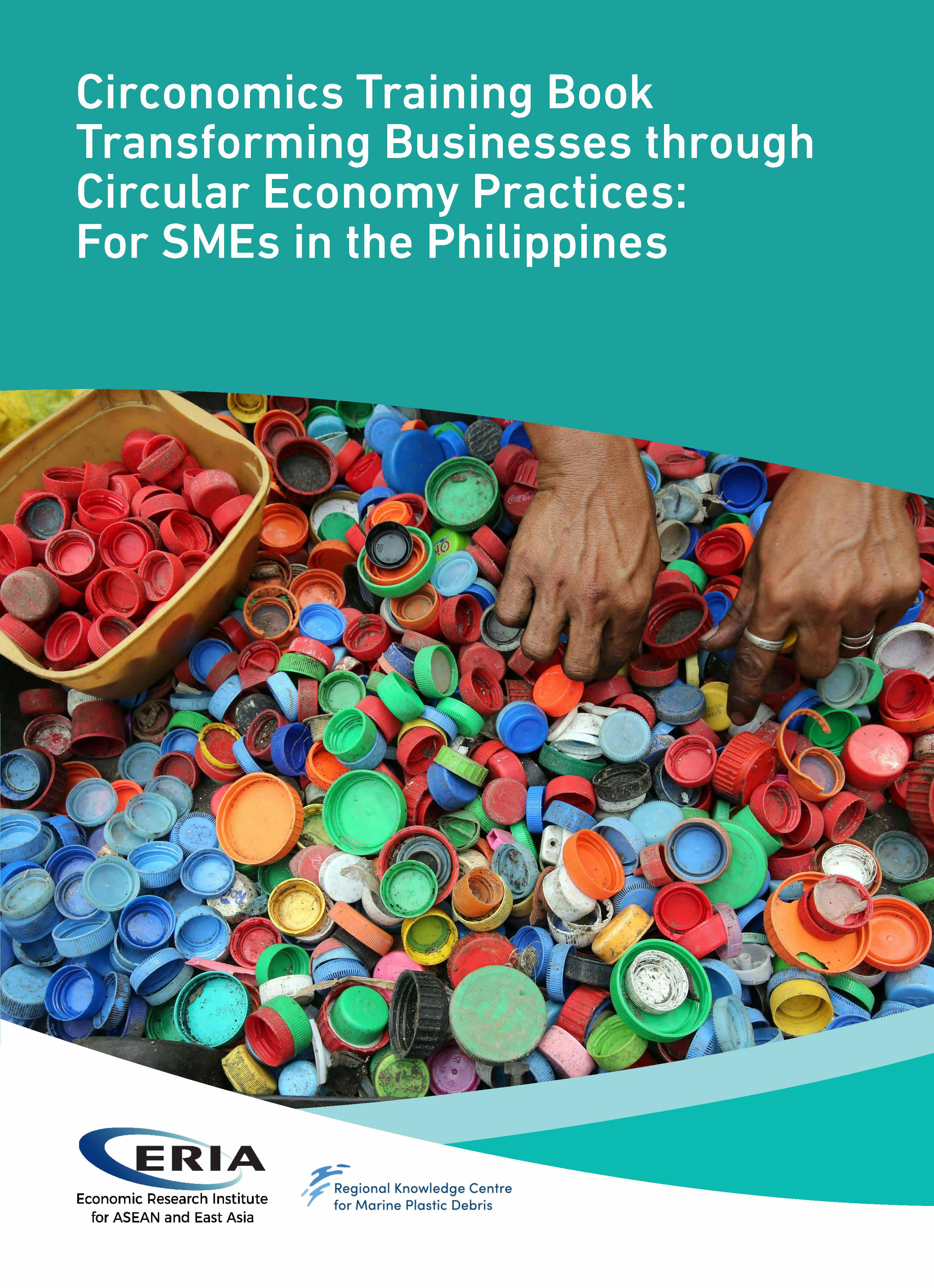
Circonomics Training Book Transforming Businesses through Circular Economy Practices: For SMEs in the Philippines
The Circonomics Training Book is a practical guide designed to help small and medium-sized enterprises (SMEs) in the Philippines and across ASEAN adopt circular economy practices for plastics. Developed by the Regional Knowledge Centre for Marine Plastic Debris (RKC-MPD) under ERIA.
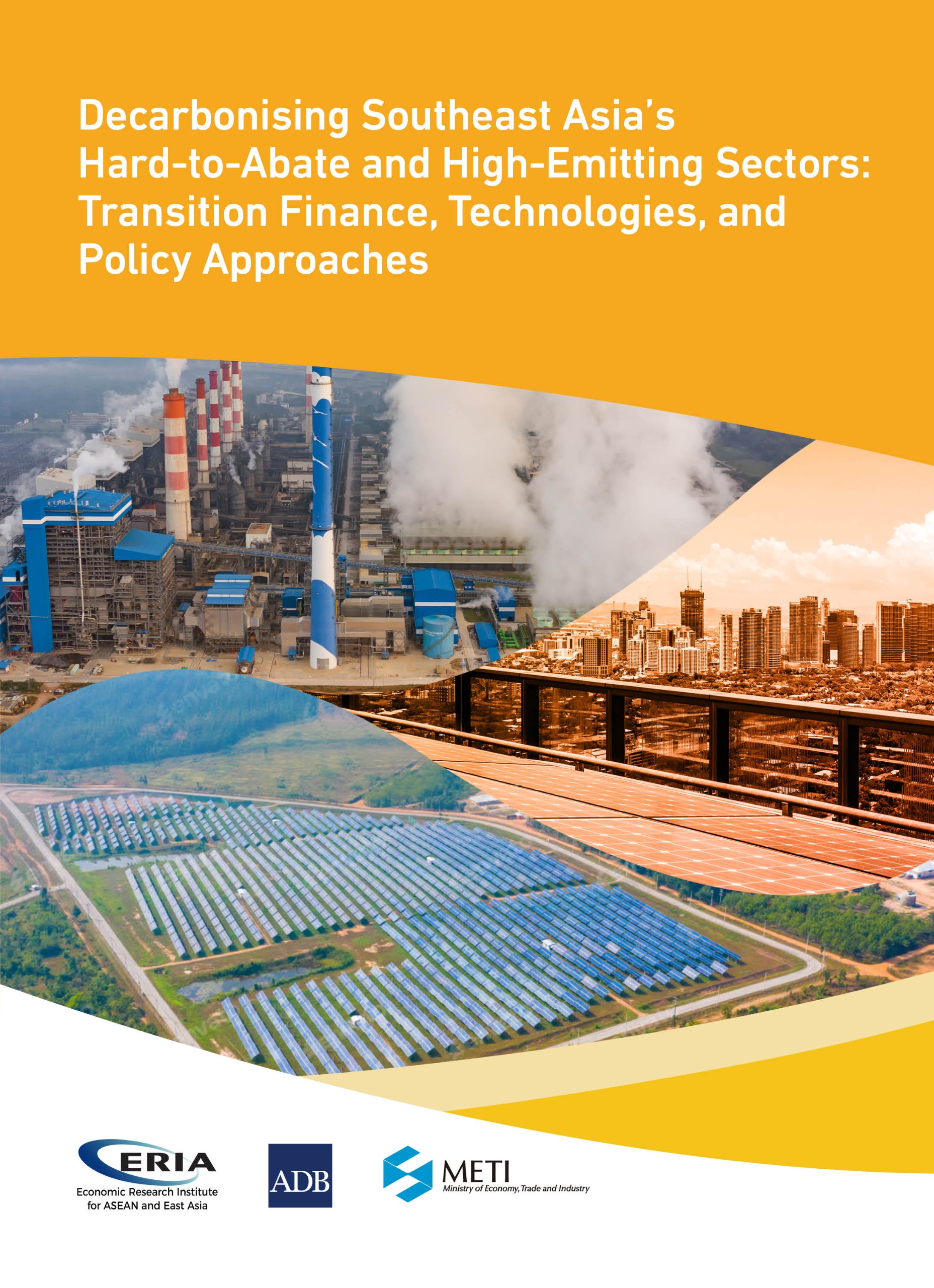
Decarbonising Southeast Asia’s Hard-to-Abate and High-Emitting Sectors: Transition Finance, Technologies, and Policy Approaches
This joint book by ERIA, ADB, and METI examines the evolving role of transition finance, technology, and policy in supporting the decarbonisation of Southeast Asia’s emissions-intensive sectors such as power and heavy industry – the so-called ‘high emissions’ and ‘hard-to-abate’ sectors, respectively.
Read More
Where Next? Priorities for the ASEAN Economic Community Post-2025
This publication provides a comprehensive analysis of the policy priorities required to sustain and deepen ASEAN’s economic integration in this rapidly changing global environment. It examines critical areas such as trade and investment strategies, digital economy, climate action, energy transition, gender equality, disaster management, institutional effectiveness, and beyond.
No results found
Try adjusting your filters or search query.